
Table of Contents
ToggleA severe storm can leave your roof battered in minutes. Wind gusts, hail, falling branches, any of these can punch holes, lift shingles, or crack flashing. The damage isn’t always obvious from the ground, and the longer you wait, the more water infiltration compromises your attic, insulation, and framing. This guide walks you through identifying storm damage, finding a qualified local contractor, navigating your insurance claim, and applying temporary fixes to protect your home until professional repairs begin. Whether you’re dealing with missing shingles or structural concerns, knowing what to do first, and what professionals should handle, saves time, money, and headache.
Key Takeaways
- Identify storm damage to your roof by looking for missing or torn shingles, hail dents, separated flashing, water stains, and granule loss from a safe ground-level position using binoculars.
- Find reliable storm damage roof repair near me by requesting at least three written estimates from licensed, insured contractors, checking reviews on Angi and BBB, and verifying references from recent work.
- Contact your homeowner’s insurance immediately after a storm with photos and documentation of damage, and be present during the adjuster’s inspection to ensure all damage is assessed and recorded.
- Apply only temporary fixes like roof cement patches or caulking until your professional contractor arrives; avoid climbing on damaged or wet roofs and don’t attempt repairs that could escalate damage.
- Act quickly after storm damage—the longer you wait, the more water infiltration compromises your attic, insulation, and framing, ultimately increasing repair costs.
Identifying Common Storm Damage to Your Roof
Signs of Damage to Look For
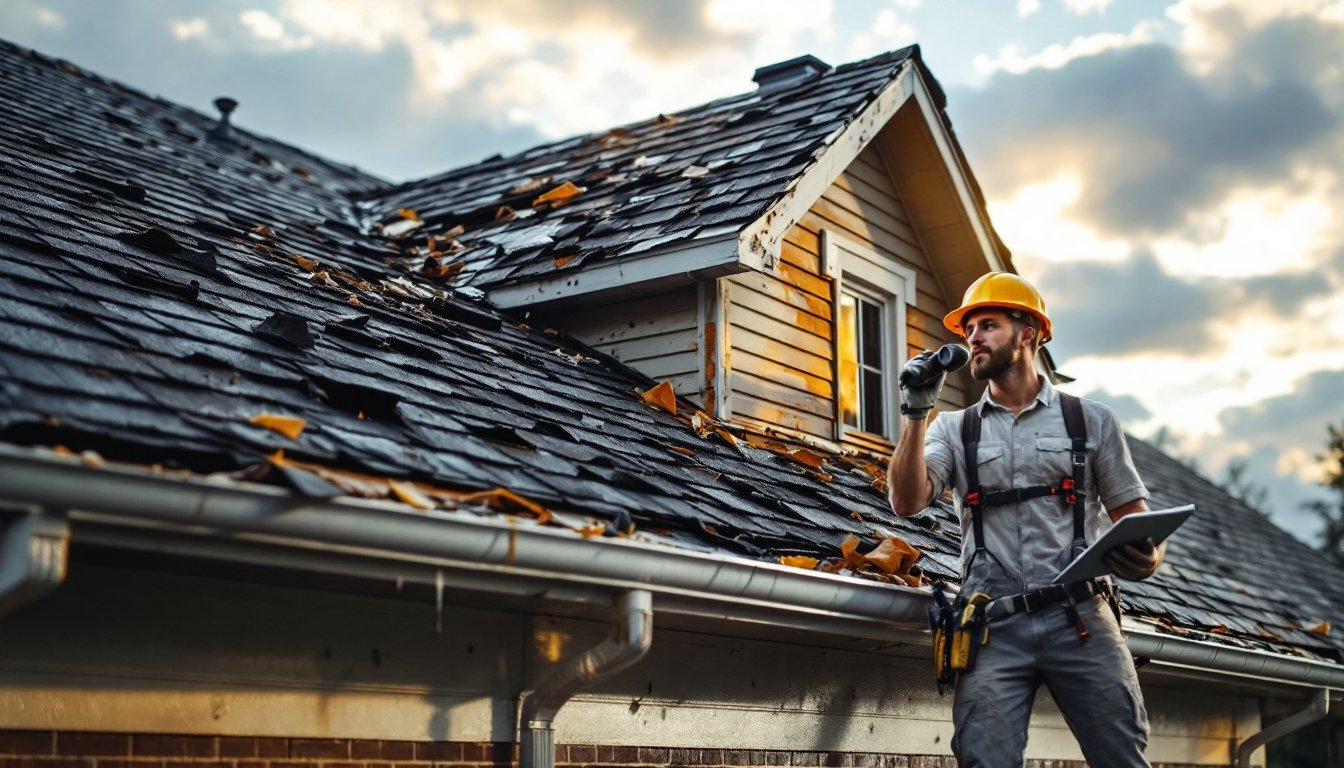
After a storm, grab binoculars and inspect from the ground first, don’t climb onto a wet or unstable roof. Look for shingles that are missing, torn, or curled at the edges. Hail dents often appear as small circular depressions, sometimes with a dark spot where the granule coating is knocked off. Check your gutters and downspouts for shingle fragments, which indicate impact damage.
Flashing (the metal strips sealing roof valleys, vents, and chimney bases) commonly separates or bends during storms. From below, water stains on your ceiling or walls are a red flag, they mean water has already penetrated deeper than the shingles. If you notice sagging areas or soft spots on your roof deck, that’s structural damage requiring immediate professional assessment.
Check around roof penetrations (vents, pipes, antennas) where fasteners may have loosened or seals may have split. Look for lifted or separated shingles where the adhesive strips have failed. Granule loss is normal wear over time, but fresh loss clustered in one area points to hail or impact. Document all visible damage with photos and date stamps, your insurance adjuster will need these.
If your roof is older (20+ years), even “minor” storm damage may be a good time to plan for replacement, as aging materials are more prone to failure. Newer roofs (under 15 years) often handle isolated damage well with targeted repairs.
How to Find Reliable Roof Repair Services in Your Area
What to Look for in a Local Contractor
Start by getting at least three estimates from licensed, insured contractors. In most states, roofers must carry a valid license and general liability plus workers’ compensation insurance. Ask for proof before they set foot on your roof. When interviewing contractors, ask how long they’ve been in business, whether they’re bonded, and if they offer a warranty on workmanship (typically 2–10 years).
Check reviews on platforms like Angi and the Better Business Bureau. Look for patterns, not just one or two negative reviews, a few complaints are normal, but recurring issues (missed deadlines, shoddy cleanup, poor communication) are warning signs. Ask for references from work completed in the last year, and actually call them. A reputable contractor won’t mind: they expect it.
Get your estimates in writing, including a detailed scope of work, materials to be used (shingle type, underlayment, fasteners), labor costs, and timeline. Watch out for vague estimates like “fix storm damage, $4,000 TBD.” You should know exactly what’s being repaired. Confirm whether they’ll handle the insurance paperwork: many established local roofers have experience with claims and can expedite approval.
Ask if they’ll pull necessary permits before starting. Roof repairs in most jurisdictions don’t require permits, but full replacements often do. Licensed contractors know local codes and won’t cut corners. If a contractor quotes a price 30–40% below others, investigate why, it may mean lower-grade materials or inexperienced labor.
Navigating the Insurance Claim Process
Contact your homeowner’s insurance company as soon as possible after the storm. Most policies cover sudden, accidental damage from wind and hail. Take photos and videos of all damage before cleanup, insurers need evidence. Document the date of the storm, weather conditions (wind speed, hail size if applicable), and any injuries or property loss.
Your insurer will assign an adjuster who inspects the damage and estimates repair costs. Be present during the inspection and point out all damage you’ve found. Provide your documentation and photos. The adjuster’s estimate becomes the baseline for your claim, but it’s not always final. If you disagree with their assessment, request a second opinion or independent adjuster review.
If your contractor’s quote exceeds the insurance estimate, don’t panic. You can appeal or request a re-inspection. Some policies include a deductible (often $500–$1,500 or a percentage of your dwelling coverage) that you pay out-of-pocket. Factor this into your cost planning. Once the claim is approved, the insurer typically issues payment, minus deductible, directly to you and/or the contractor (depending on your policy and whether there’s a lien).
Keep detailed records of all correspondence with your insurance company, emails, claim numbers, adjuster names, and dates. If repairs drag on, follow up with your adjuster. Reputable roofers often file claims and manage the approval process for customers, which reduces your administrative burden. HomeAdvisor also has resources on understanding insurance coverage and claim documentation.
Temporary Fixes Before Professional Help Arrives
Until your roofer arrives, temporary measures prevent further interior damage. Safety first: Never work on a wet, steep, or damaged roof alone, and always wear a safety harness if you must climb. In most cases, temporary fixes should be ground-level or limited to very gentle roof angles where you can secure yourself.
For missing or torn shingles visible from the ground, apply a roof cement patch (available at any home center) as a stopgap. Clean the area, apply the cement, and press a patch of tar paper or even a shingle scrap into place. It won’t last long-term, but it buys time. If flashing has separated, you can use roofing tar or silicone caulk to reseal the joint temporarily. Again, this is a bridge measure, not a permanent fix.
For water actively dripping into your attic or living spaces, place buckets and run a dehumidifier in affected areas to prevent mold. If the leak is large, locate the source from inside your attic (follow the water trail) and mark it for your contractor. Tarping the damaged section is risky on a steep roof and often does more damage if done incorrectly, so reserve tarping for truly severe damage and only if you’re confident in your safety setup.
Don’t attempt to nail down loose shingles or replace flashing yourself unless you have roof experience. Improper fastening, wrong materials, or working on a damaged roof can escalate damage and void your warranty. Contractors expect temporary conditions and factor them into their repair plan. Your focus should be documenting damage and getting a professional onsite quickly.
Conclusion
Storm damage to your roof demands quick action but smart decision-making. Identify damage, secure three competitive estimates from licensed locals, file your insurance claim promptly with documentation, and apply only safe temporary measures. A trusted contractor network and your homeowner’s insurance are your allies in recovery. Act within days of a storm, the longer damage sits, the costlier it becomes. Your roof protects everything beneath it: treating storm repairs as a priority keeps your home and family safe.