
Table of Contents
ToggleA large sectional sofa can anchor your living room and define how your family actually lives in the space, not how a magazine says you should. But choosing the right one means understanding what “large” really means, how it’ll fit through your doorway, and whether that beautiful fabric will hold up to real life. Whether you’re eyeing an extra large sectional sofa for an open-concept living area or hunting for the largest sectional sofa your space can handle, the stakes feel high when you’re dropping thousands on furniture. This guide walks you through the essentials: measuring accurately, understanding materials, weighing configurations, and making a smart investment that you won’t regret in five years.
Key Takeaways
- A large sectional sofa maximizes seating in open floor plans and creates an efficient gathering space that encourages family interaction over scattered individual furniture.
- Accurate measurements of walls, doorways, hallways, and ceiling height are critical before purchasing—a single sectional piece may be 40 inches wide and 90 inches long, making it impossible to fit through standard 32-inch doorways without proper planning.
- Fabric choice directly impacts durability and maintenance costs; performance fabrics and microfiber resist stains better than natural linens, while top-grain leather lasts decades but requires conditioning and professional care.
- Mid-range sectionals ($2,500–$4,500) offer the best value, with quality cushioning and longer warranties that justify their cost when compared to budget options that may need replacement within four to five years.
- Configuration options like chaise extensions, sleeper mechanisms, and reversible arms add flexibility, but testing comfort and cushion firmness in person helps ensure your investment matches your family’s actual sitting preferences.
- Styling with layered textures, throw pillows, area rugs, and strategic lighting transforms a large sectional sofa from a space-filler into an intentional anchor that defines your room’s personality and function.
Understanding Large Sectional Sofas
A sectional sofa is really just an L-shaped or U-shaped seating configuration made up of separate pieces that connect together. “Large” is more subjective than a strict measurement, it usually means a sectional with three or more seating sections that can comfortably fit four or more people. Some people think of a giant sectional sofa as anything over 100 inches in total length, while others reserve that term for premium pieces that are modular and highly customizable.
The appeal is obvious: a large sectional maximizes seating in open floor plans, fits snugly into corners, and creates a cozy gathering spot for families. Unlike a traditional sofa-and-chair combo, a sectional uses floor space more efficiently. The trade-off? Sectionals take up more wall real estate, so you need to plan carefully before you buy.
Sectionals come in fixed configurations (the shape is set and won’t change) or modular designs where you can add, remove, or rearrange pieces. Modular designs cost more upfront but give you flexibility if you move or redecorate.
Measuring Your Space and Layout
This is where most people skip ahead and regret it. Before you even look at pictures, grab a tape measure and map out your room.
First, measure the wall where the sectional will sit. Don’t just write down one number, measure the length and note any obstacles: windows, doors, electrical outlets, heating vents, or architectural details. A large sectional might be 120 inches long, but if your wall is only 130 inches with a window taking up 40 inches in the middle, you’ve got a problem.
Next, measure the doorways and hallways the sectional has to travel through to reach your room. This is critical. Sectional pieces are heavy and bulky, a single sofa section might be 40 inches wide and 90 inches long. If your doorway is only 32 inches wide, that piece won’t make it through without disassembly (which some sectionals allow, others don’t). Ask the retailer about piece dimensions before you commit.
Also map out where you want foot traffic to flow and where you’ll place a coffee table or entertainment unit. Your giant sectional sofa shouldn’t trap people in the room or make the space feel cramped. A rough rule: leave at least 18 inches of walking space around furniture.
Finally, check ceiling height. This matters less for sectionals than for tall bookcases, but an oversized sectional in a room with a low ceiling can feel oppressive. Step back and visualize the proportions before buying.
Key Features to Consider
Fabric and Material Options
Fabric choice makes or breaks a sectional’s durability and maintenance burden. Natural fabrics like linen and cotton breathe beautifully but stain easily and fade in sunlight. If you have kids or pets, linen might frustrate you within a year.
Microfiber is forgiving, it resists stains, feels soft, and costs less than natural fibers. The downside? It can pill over time and doesn’t age as gracefully as wool or quality leather. Leather (genuine or bonded) looks luxurious and lasts decades, but it’s pricey and requires conditioning. Microsuede offers a middle ground: it feels like suede but resists stains better.
Performance fabrics are woven with special finishes that repel liquid and resist staining. They’re ideal for high-traffic homes and feel much better than they used to. Many contemporary designers now specify performance blends as standard on sectionals over $2,000.
Whatever you choose, ask about cleaning codes. “W” means water-cleanable: “S” means solvent-cleanable: “WS” means either works. A “Code X” fabric requires professional cleaning only and will cost you.
Configuration and Comfort
A typical large sectional comes in a left-arm or right-arm configuration, this refers to which side the armrest is on when you’re looking at the sofa from the front. Some pieces are reversible, which adds flexibility but also cost. An extra large sectional sofa might include a chaise (extended leg rest), a sleeper mechanism, or storage underneath.
Think about how people actually sit. Do they like deep seats and soft cushions, or do they prefer firmer support? Deeper seats mean less legroom in the same footprint. Firmer cushions hold their shape longer but feel less enveloping at first. High-density foam ($500–$800 per section) outlasts budget foam, which can sag after three years of family use.
If you’re considering a sleeper sectional, test the mattress yourself if possible. Sofa bed mattresses are notoriously uncomfortable, they’re thin (usually 4–5 inches) and awkward to deploy. Some brands use better-quality mattresses, but expect to spend extra. A queen sleeper adds real value if overnight guests are common.
Budget and Long-Term Investment
Large sectionals range from $1,200 to $8,000+, depending on brand, materials, and customization. A budget sectional (under $2,000) gets you basic comfort and decent construction but may not last beyond five years of regular use. Mid-range options ($2,500–$4,500) offer better cushioning, frame materials, and warranty coverage, this is where most homeowners find real value.
High-end sectionals ($5,000+) justify their cost through premium fabrics (top-grain leather, designer textiles), superior construction (hardwood frames, eight-way hand-tied springs), and longer warranties. Luxury brands like those featured in contemporary furniture and design product reviews often include customization options that budget lines don’t.
Consider the math: a $3,500 sectional lasting eight years costs $438 per year. A $1,200 sectional lasting four years costs $300 per year, but you’ll buy two sectionals and deal with replacement twice. Higher-end pieces often include stain protection and more durable construction.
Check the warranty. Most budget sectionals offer one year: quality brands offer five to ten years on the frame and mechanism. That’s a signal of confidence in the product. Also ask about delivery and assembly costs, these can add $300–$800 depending on your location and whether the retailer will remove your old furniture.
Styling Your Sectional in Your Home
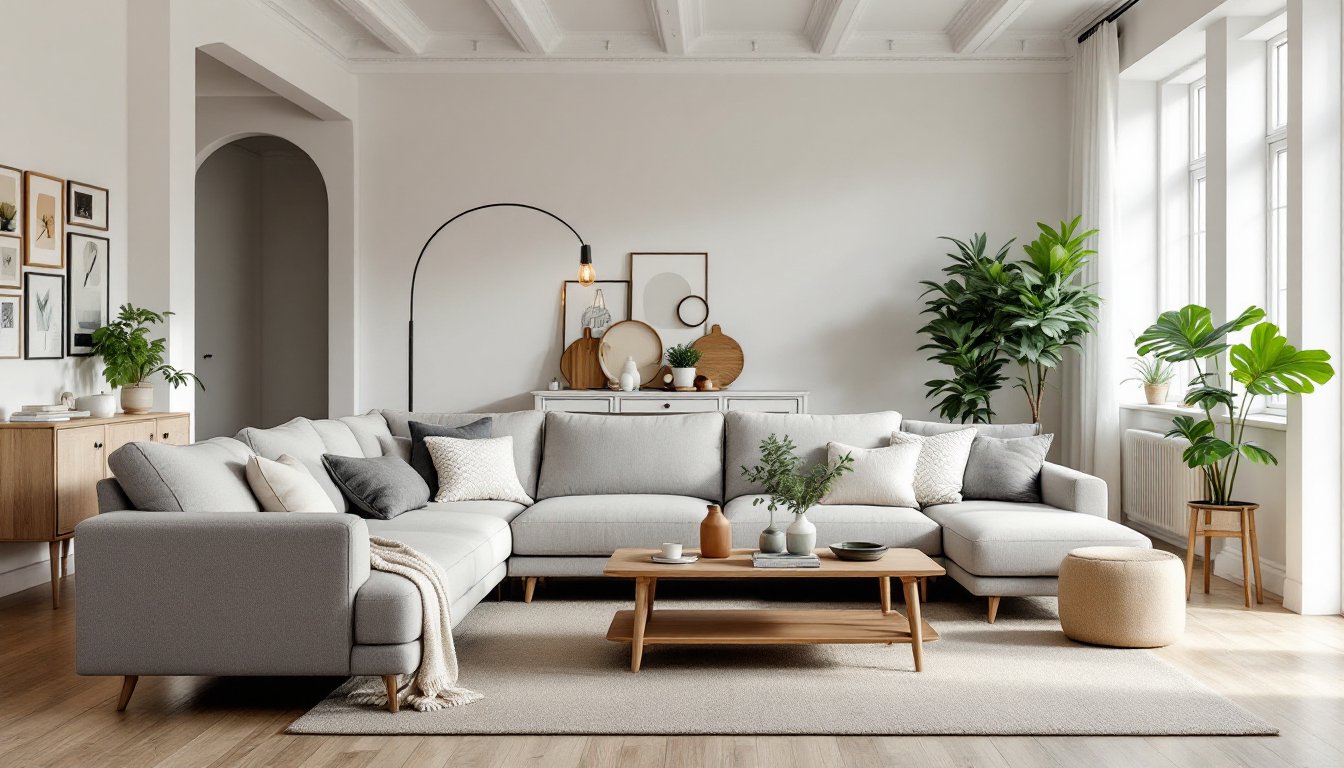
Once your sectional arrives, the room’s personality shifts around it. A largest sectional sofa in a neutral tone (gray, beige, charcoal) works with almost any decor and won’t feel dated in three years. Bolder colors (navy, forest green, terracotta) make a statement but require intentional surrounding décor.
Layering matters. Throw pillows and blankets soften the visual weight of a large sectional sofa and add comfort. Mix textures, a linen pillow next to a velvet one, a chunky knit throw draped over the arm. These touches are what make a sectional feel intentional rather than just filling space.
Lighting is crucial. A floor lamp at the end of your sectional or pendant lights above a nearby console create ambiance and make the seating area feel like a designed zone, not a furniture dump. Rugs define the space too, a rug anchoring the sectional ties it visually to the rest of the room and deadens sound in open-concept layouts.
For inspiration on how designers style large seating pieces, luxury interior design and designer furniture trends showcase real rooms where sectionals anchor the space. You can also explore curated large sectional sofas in various sizes and styles to see how different configurations and fabrics work in different rooms.
Don’t underestimate the power of a sectional to reshape how you use a room. Once it’s in place, you might find your family gathering there instead of scattered across individual seating. That’s the real win, not the Instagram-worthy photo, but the functional comfort that gets daily use.