
Table of Contents
ToggleA stone backsplash transforms your kitchen in ways that go beyond looks. It protects walls from splashes and grease while adding texture, depth, and durability to one of the home’s most hardworking spaces. Whether you’re renovating a dated kitchen or refreshing your cooking zone, stone offers authentic character that tile trends come and go around. In 2026, natural stone backsplashes remain a smart investment for homeowners seeking longevity and design integrity. This guide walks you through why stone works, which materials suit your space, and how to plan an installation you’ll enjoy for decades.
Key Takeaways
- A stone backsplash kitchen provides lasting durability and authentic character that outlasts design trends while protecting walls from moisture, grease, and heat damage.
- Marble offers timeless elegance but requires quarterly sealing and immediate spill cleanup, while granite delivers superior heat and stain resistance with lower maintenance demands and costs between $30–$80 per square foot.
- Slate combines modern appeal with natural texture, falling between marble and granite in price ($35–$75 per square foot) and maintenance, though its porous surface requires regular sealing.
- Proper planning requires measuring your backsplash area carefully, ordering physical samples to test in your kitchen’s lighting, and deciding between full slabs (fewer seams) or tile-cut stone (greater layout flexibility).
- Professional installation using thin-set mortar over cement board takes 2–4 days and typically costs $2,000–$5,000 for a standard backsplash, with labor ranging from $40–$100+ per hour for skilled work.
- Stone backsplashes add significant resale value and signal quality craftsmanship to buyers, making this upgrade one of the few cosmetic improvements that doesn’t require justification to real estate agents.
Why Stone Backsplashes Are A Smart Choice For Modern Kitchens
Stone backsplashes stand out because they’re functional and permanent. Unlike paint or peel-and-stick tile, natural stone won’t fade, peel, or crack under kitchen heat and humidity. It resists moisture absorption better than porous materials, making cleanup straightforward, a quick wipe with a damp cloth handles most spills.
Durability is just the opening act. Stone brings visual weight to a kitchen without feeling heavy. A marble slab catches light differently at each angle. Granite absorbs warm undertones that complement stainless appliances and wood cabinetry alike. Slate reads modern or rustic depending on how you set it. The material becomes part of your kitchen’s architecture, not a trend you’ll tire of in three years.
Beyond aesthetics, stone adds resale value. Potential buyers recognize quality when they see it. A well-executed stone backsplash signals that the kitchen was cared for, upgraded thoughtfully, and built to last. It’s one of the few cosmetic improvements that doesn’t require justification to your realtor.
There’s also the honesty factor: stone looks like what it is. No faking authenticity. In a world of engineered surfaces and veneers, people appreciate something pulled from the earth and set into their home. That integrity resonates.
Types Of Stone For Your Kitchen Backsplash
Marble: Elegant And Timeless
Marble is the first choice for kitchens pursuing elegance. Its veining is naturally dramatic and utterly unrepeatable, no two slabs are identical. It works in contemporary, transitional, and traditional spaces because the material itself commands attention without trendy patterns.
But honesty requires mentioning marble’s limitations. It’s softer than granite or slate, so acidic substances (lemon juice, wine, vinegar) and oils can etch the surface. That means sealing it quarterly and wiping spills immediately. Marble backsplashes near the stove need extra protection: splashing oil ages the finish faster than passive backsplash areas. If you’re willing to treat marble with respect, it rewards you with unmatched visual depth. Many homeowners find the patina that develops over time, small etches and marks, adds character rather than looking damaged.
Marble pricing ranges from $40 to $100+ per square foot depending on origin and vein patterns. Rare Italian or Portuguese varieties command premium prices.
Granite: Durable And Heat-Resistant
Granite is the pragmatist’s choice. It’s igneous rock, crystalline and incredibly hard. Granite resists scratches, stains, and heat far better than marble. You can set a hot pan on it without worry. Acidic spills don’t etch it. That durability translates to lower maintenance, annual sealing rather than quarterly, and fewer restrictions on daily use.
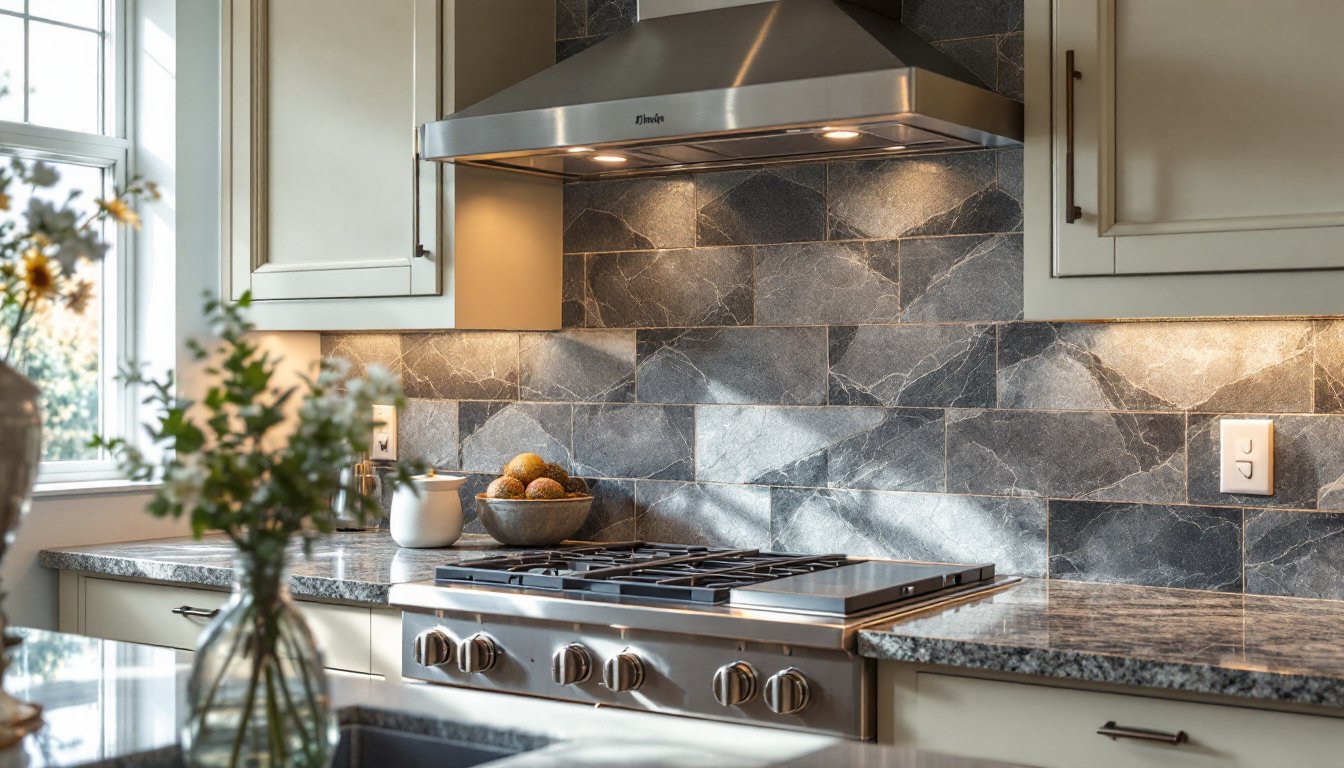
Granite typically costs $30 to $80 per square foot, making it competitive with high-end marble while demanding less fussy care. The color range is vast: blacks and grays, warm golds and reds, speckled patterns that hide crumbs and dust between cleanings.
The only real drawback is visual subtlety. Granite is busy, lots of flecking and variation. In small kitchens or with bold cabinet colors, that visual weight can feel crowded. It’s worth seeing samples in your space’s lighting before committing.
Slate: Unique Texture And Modern Appeal
Slate has become increasingly popular for backsplashes because it reads contemporary while feeling natural. It’s layered metamorphic rock with a slightly textured, matte finish that modern kitchens crave. The colors are subtle: deep grays, blacks with green undertones, warm charcoals. No sparkle, no veining drama, just honest, understated presence.
Slate’s texture is both strength and consideration. Those layers mean better grip than polished marble, less slippery underfoot and easier to handle during installation. The downside: texture traps dust and requires a soft brush or microfiber cloth for cleaning. It’s not “wipe and done” like granite. Slate also splits along its natural planes, so installation must respect the stone’s grain.
Cost falls between marble and granite: $35 to $75 per square foot. Sealing is essential, unlike granite, slate is more porous and benefits from regular protection.
Planning Your Stone Backsplash Installation
Before ordering stone, measure your backsplash area carefully. Run a tape measure from countertop to bottom of cabinets, and along the full wall length between appliances. Note window placement, outlets, and any architectural quirks. A backsplash usually spans 18 to 24 inches tall, though many kitchens go taller, up to the cabinet bottom or even the soffit.
Order samples. Most stone suppliers will send small cuts so you can see the finish, texture, and color in your kitchen’s actual light. Morning light, afternoon light, and under-cabinet lighting all affect how stone reads. Live with samples for a few days. That process feels slow until you catch the stone in different times of day and see if it feels right.
Consider the layout. Full slabs require fewer seams but generate more waste and cost. Tile-cut stone, smaller pieces mortared together, gives you flexibility in pattern (running bond, herringbone, subway). Fewer seams mean fewer grout lines to maintain, but more seams mean you can adjust layout around outlets and appliances more neatly. There’s no universally “correct” choice: it depends on your kitchen’s layout and how visible seams will be.
If your kitchen has adjacent walls (island sides, dining area visible from kitchen), think about how the backsplash transitions. Do you carry the stone around the corner? Stop at inside corners? A professional designer or fabricator can guide this, but decisions made now prevent awkward cuts and visual breaks later.
Budget realistically. Material cost is one piece: fabrication (cutting, finishing, sealing) and installation add $40 to $100+ per hour for skilled labor. A typical backsplash (80–120 square feet) often runs $2,000 to $5,000 installed, depending on stone type, layout complexity, and your region. Get at least two quotes before hiring.
Installation Methods And What To Expect
Stone backsplashes are installed using one of two methods: full-mortar (also called the “scratch coat” or “float” method) or thin-set mortar over cement board.
Thin-set over cement board is standard for most kitchens. A layer of cement backer board is fastened to the wall studs with corrosion-resistant screws. Thin-set mortar (a polymer-modified cement) is spread onto the backer board with a notched trowel, creating ridges that help stone adhere. The stone is pressed into place, adjusted for level and plumb, and tapped gently with a rubber mallet. Once the mortar cures (24–48 hours), grout fills the seams.
This method is reliable, forgiving of minor wall irregularities, and faster than traditional float installation. Most installers prefer it because it distributes weight evenly and accommodates standard backsplash thickness.
Full-mortar installation uses thicker mortar (lime-based or cement) applied directly to the wall in multiple coats. It’s traditional, absorbs seasonal movement better in older homes, but requires more skill and time. Unless your walls are severely uneven or you have specific historical requirements, thin-set is the practical choice.
Grout selection matters. Unsanded grout works for thin seams (less than 1/8 inch): sanded grout is stronger and recommended for joints 1/8 inch or wider. Epoxy grout resists staining better than cement grout but costs more and requires a skilled installer.
Sealing happens after grout cures. Stone (especially marble and slate) should be sealed before grouting to prevent mortar staining. After grouting and final cleanup, a second seal protects grout lines. Your fabricator or installer should clarify what’s sealed at the shop versus on-site.
Expect installation to take 2–4 days depending on complexity. That includes wall prep, substrate installation, stone setting, grouting, cleanup, and final sealing. You’ll want to avoid the kitchen during installation, dust, noise, and wet mortar make cooking impossible.
Hiring a professional is strongly recommended unless you have experience with tile and stone. Uneven walls, hidden utilities, and the weight of stone demand precision. Houzz has resources for finding local contractors and reviewing their work, and The Kitchn offers kitchen design guidance that can inform your choices. For inspiration on dramatic marble installs, 16 favorite marble kitchen backsplashes showcase maximum impact.