
Table of Contents
ToggleIf you’ve been eyeing a KitchenAid stand mixer at Target, you’re looking at one of the most practical investments a home cook can make. These workhorses sit on counters in millions of kitchens, and for good reason. Whether you’re mixing bread dough weekly or whipping cream occasionally, a KitchenAid mixer tackles repetitive mixing tasks that would otherwise wear out your arm and waste time. Target carries multiple models at different price points, so finding the right fit depends on your baking habits, kitchen space, and budget. This guide walks you through what’s available, how to compare options, and why these machines have earned their reputation as kitchen staples.
Key Takeaways
- A KitchenAid mixer from Target handles repetitive mixing tasks that save time and arm strength, making it one of the most practical kitchen investments a home cook can make.
- Target carries multiple KitchenAid models at different price points: 5-quart Artisan models ($300–$450) suit occasional bakers, while 6-quart bowl-lift machines ($450–$650) appeal to serious bakers who need larger capacity.
- The Artisan Plus 5-quart tilt-head mixer represents KitchenAid’s first major design update in 70 years, offering a stronger motor and quieter operation that justifies the extra cost for frequent users.
- Choosing the right KitchenAid mixer depends on three factors: baking frequency, available counter space, and typical batch size—measure your kitchen before purchasing to ensure proper fit.
- Regular maintenance, including hand-washing attachments immediately after use and running the mixer at recommended speeds, ensures your KitchenAid stand mixer lasts for decades with excellent parts availability from the manufacturer.
Why KitchenAid Mixers Belong in Every Home Kitchen
A KitchenAid stand mixer handles jobs that hand mixers, food processors, and even basic blenders simply can’t match. The motor drives at consistent speed without fatigue, the bowl rotates beneath a fixed beater, and the whole machine stays planted on your counter, no arm strength required.
Think about mixing bread dough. Hand-mixing exhausts you after five minutes: a stand mixer kneads for ten, twelve, or fifteen minutes without complaint. The same applies to cookie batters, cake batters, whipped cream, and meringues. The mixer maintains even speed, reaches every corner of the bowl, and frees your hands to work on other prep.
Beyond speed, stand mixers improve consistency. Every batch of cookies tastes the same because the mixing ratio and duration don’t vary with your energy level. Bakers who test recipes professionally rely on stand mixers precisely because results are reproducible. For a home kitchen, that means fewer failed batches and better-tasting output from the same recipe.
KitchenAid Mixer Models and Sizes Available at Target
Target stocks several KitchenAid models in different capacities. The most common choices are the 5-quart tilt-head and 6-quart bowl-lift machines, though availability changes seasonally and by location. A quart measures volume: a 5-quart bowl holds roughly what five one-quart measuring cups would fill.
5-quart models suit most home bakers. They handle bread dough, cookies, cakes, and whipped cream without trouble. The tilt-head design means you tilt the bowl up to access the beater, convenient for quick ingredient additions. These typically cost less than larger models and take up less counter space.
6-quart bowl-lift models appeal to serious bakers or families baking in volume. The bowl raises and lowers on a mechanical lift, leaving your hands free. A 6-quart capacity handles bigger batches, but these machines are heavier and bulkier. Smaller kitchens often find the 5-quart more practical.
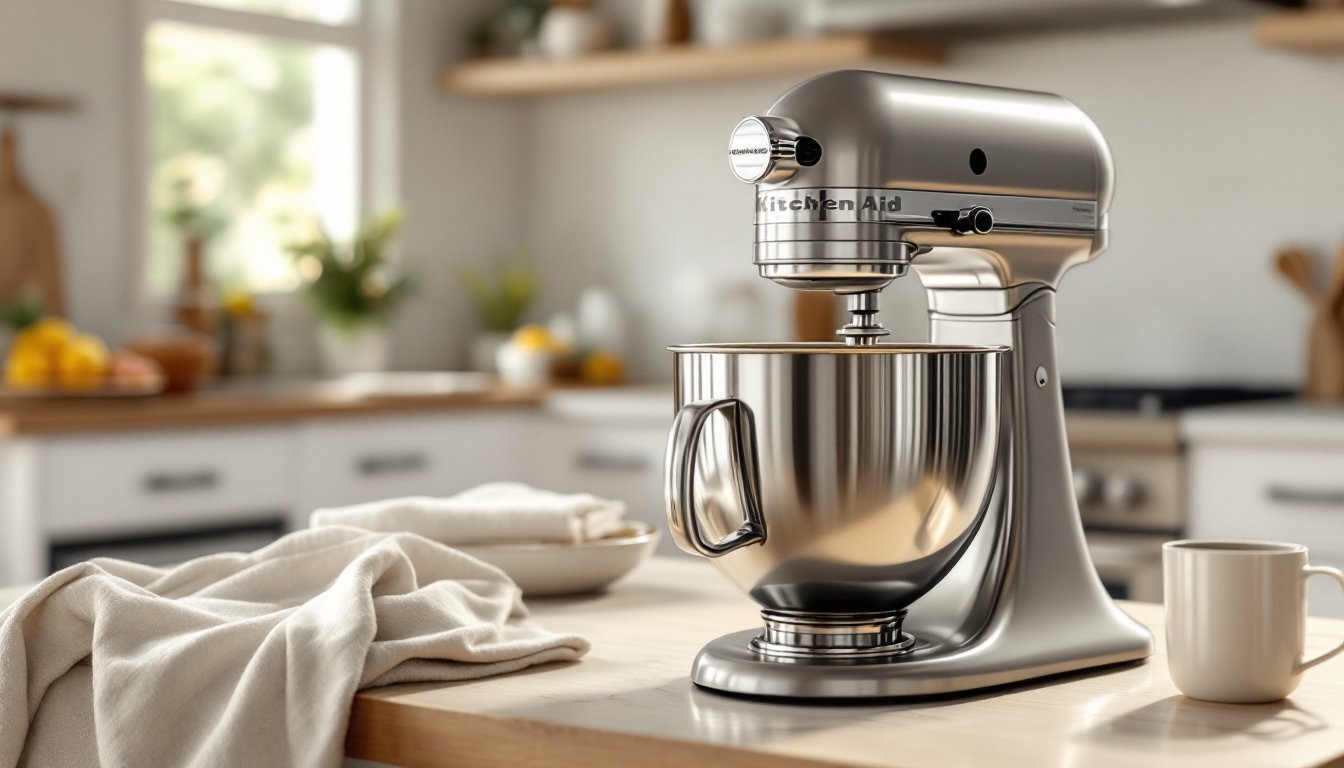
Target also occasionally carries the Artisan Plus (5-quart tilt-head), which is the newer upgrade to KitchenAid’s classic design. The Artisan Plus 5-Quart Tilt-Head, featuring improved mechanics and quieter operation than the original Artisan model.
Classic Versus Artisan: Finding Your Perfect Match
The original Artisan (5-quart, tilt-head) remains affordable and widely available. It’s proven, reliable, and meets the needs of most home cooks. The motor is powerful enough for bread, and the price point makes it an easy commitment.
The Artisan Plus builds on the classic with a stronger motor, quieter operation, and updated internal gearing. If you’ll use your mixer frequently, multiple times a week, the Artisan Plus justifies the extra cost. The noise reduction alone appeals to early risers or open-concept kitchens. If you bake occasionally, the standard Artisan handles everything you’ll throw at it.
Compare these two against your actual baking schedule. If you’re mixing twice a month, the original Artisan won’t strain. If you’re a regular baker, the Artisan Plus offers longevity and comfort.
Pricing and Budget-Friendly Options
KitchenAid stand mixers at Target typically range from $300 to $700+, depending on capacity and features. A 5-quart Artisan usually falls in the $300–$450 range. A 6-quart bowl-lift runs $450–$650. The Artisan Plus sits slightly higher at $400–$500.
Target frequently runs sales, bundle deals, or clearance events on seasonal appliances. Spring (around March–April) often brings deeper discounts as retailers clear winter baking inventory. Shopping during sales can save you $50–$150 on the model you want.
Pay close attention to Target’s return policy (usually 90 days) and any extended warranty options. A mixer is an investment, and a return window gives you time to test whether it fits your kitchen workflow.
Budget-conscious shoppers should compare the entry-level Artisan against used or refurbished models from Target’s clearance section or resale platforms. A lightly used 5-quart Artisan often costs $200–$250, though you forfeit the warranty. New always carries peace of mind.
How to Choose the Right KitchenAid Mixer for Your Kitchen
Choosing the right mixer starts with honest assessment of three factors: baking frequency, counter space, and batch size.
If you bake bread weekly and frequently make cookies or cakes, invest in a 6-quart bowl-lift or the Artisan Plus 5-quart. These machines reward frequent use with durability and power. If you mix dough monthly and whip cream occasionally, a 5-quart Artisan suffices and saves space.
Measure your counter before buying. A 5-quart tilt-head occupies roughly 14 inches wide by 8 inches deep. A 6-quart bowl-lift is wider and heavier. Some kitchens lack the real estate: in those cases, a 5-quart makes more sense, even if you’d prefer the larger capacity.
Consider what you actually bake. Cookie recipes typically call for 1–3 cups of dough, fitting easily in a 5-quart bowl. Bread recipes often require 4–6 cups of dough, approaching the limit of a 5-quart but well within a 6-quart. If you frequently double recipes or bake multiple items in one session, go larger.
Finally, think about accessory needs. KitchenAid sells pasta attachments, grain mills, and specialized beaters separately. All models accept the same accessories, so that doesn’t drive the choice, but knowing you can expand your mixer’s function might influence budget allocation.
Maintenance Tips and Getting the Most Out of Your Investment
A KitchenAid mixer is nearly indestructible if treated properly. Most failures come from neglect, not manufacturing defects.
After every use, hand-wash the bowl, beaters, dough hooks, and whip attachments immediately. Dried batter is hard to remove and can corrode metal if left sitting. The mixer body itself needs only a dry cloth, never submerge it. Check the instruction manual for your specific model’s care guidelines.
Store attachments in a designated drawer or container. Mixing bowls can live in a lower cabinet. Keeping everything accessible means you’ll actually use your mixer rather than letting it gather dust.
According to home organization best practices, regularly maintained kitchen appliances live far longer than neglected ones. Run your mixer at the recommended speed. Higher speeds don’t mix faster or better: they risk overheating the motor and damage to the gearbox.
Listen to your mixer. A grinding or squealing sound signals internal wear or debris. Stop, unplug, and inspect the bowl and attachments. A small amount of flour dust is normal: lumps or metal shavings mean it’s time for professional service or replacement.
KitchenAid provides excellent customer service and parts availability. The company sells replacement bowls ($30–$50), beaters, and dough hooks for nearly every model still in production. That repairability is a huge reason these mixers last decades.
Conclusion
A KitchenAid stand mixer from Target is a long-term kitchen investment that pays dividends in time saved and consistency gained. Whether you choose the 5-quart Artisan for occasional baking or the 6-quart bowl-lift for serious production, you’re buying durability and proven performance. Measure your space, match the capacity to your baking habits, and don’t skip maintenance. The mixer you buy in 2026 can easily serve your kitchen for twenty years.