
Table of Contents
ToggleA coffee table tray is one of the simplest ways to pull together a living room without heavy lifting or renovation work. It corrals clutter, anchors your decor, and gives you a refreshed look in minutes. Whether your style leans minimal, eclectic, or layered-and-rich, the right tray becomes the foundation for everything else that sits on your table. Homeowners and designers alike rely on coffee table decor trays to add intentionality to the space where friends gather and coffee cups land. This guide walks you through selecting the perfect tray, styling it with confidence, and keeping it looking sharp long-term.
Key Takeaways
- A coffee table decor tray instantly transforms a living room by creating visual calm, protecting your furniture surface, and signaling intentionality to guests.
- Select a tray that occupies 60–75% of your table’s surface and complements your existing materials—wood, metal, ceramic, or rattan each suit different room styles.
- Layer your tray with 5–7 items in odd numbers, varying heights and textures, with one focal point and breathing room to avoid an overcrowded look.
- Stick to a color palette of 2–3 colors plus neutrals, and rotate seasonal elements every 2–4 weeks to keep your coffee table decor tray fresh and intentional.
- Maintain your tray long-term by dusting weekly, protecting surfaces with appropriate care (oil for wood, polish for brass), and addressing spills immediately to prevent damage.
Why A Coffee Table Decor Tray Is A Game-Changer
A coffee table tray does heavy lifting that most people overlook. It visually grounds your table by defining a zone, rather than objects scattered to the edges, everything sits contained and purposeful. This creates immediate visual calm in a room that might otherwise feel busy.
Beyond aesthetics, a tray is practical. It protects your wood or stone surface from water rings, scratches, and heat marks. When you’re moving your table for cleaning or rearranging furniture, the tray keeps everything in one place instead of sliding around. It’s also flexible: you can swap out the tray’s contents seasonally or weekly without touching the table itself.
A tray signals intentionality to guests. Rather than looking like objects that landed there by accident, a thoughtfully styled tray shows you’ve considered the space. That small design move sets a tone, and it costs far less than repainting walls or buying new furniture.
Choosing The Right Tray For Your Space
Material And Style Considerations
Tray materials range widely: wood, metal, ceramic, glass, marble, rattan, and composite options. Each brings different character. A wooden tray fits farmhouse, rustic, or mid-century modern rooms: metal trays (brass, iron, or brushed steel) suit contemporary or industrial spaces: marble or ceramic leans luxury or eclectic.
Consider your room’s existing materials. If your coffee table is dark wood, a light wood or metal tray creates contrast. If the table is glass or metal, a warm wood or woven rattan tray adds textural balance. The tray doesn’t need to match your table, it should complement it.
Durability matters too. High-traffic living rooms see spills and wear: solid wood or sealed metal holds up better than delicate ceramic. A woven rattan or jute tray adds warmth and visual interest but requires occasional dusting and isn’t ideal for wet items.
Size And Shape Selection
Measure your coffee table’s width and depth before shopping. A tray should occupy roughly 60–75% of the table’s surface, large enough to be a visual anchor, small enough to leave breathing room around it. A table that’s 48 inches wide works well with a tray around 28–32 inches long.
Shape matters. Rectangular trays fit most tables and align naturally with rectangular surfaces. Oval or round trays soften a room and suit circular or curved tables. Square trays suit compact spaces or smaller accent tables. Don’t overthink it: rectangular is the most forgiving choice and works with nearly every setup.
Height is subtle but real. A tray with raised edges (½ to 1 inch) prevents items from sliding off and adds visual definition. A flat tray sits seamlessly but requires careful styling to prevent things from tumbling.
Essential Items To Layer On Your Tray
The best trays use what designers call “layering”, stacking items at different heights and varying textures so the tray feels dynamic, not sparse or overcrowded.
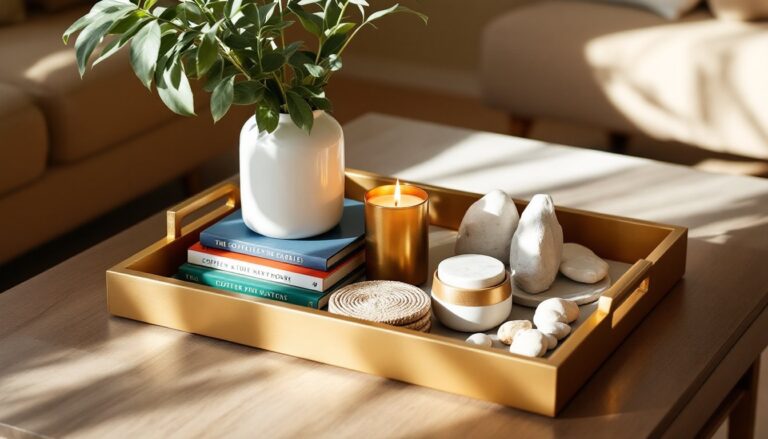
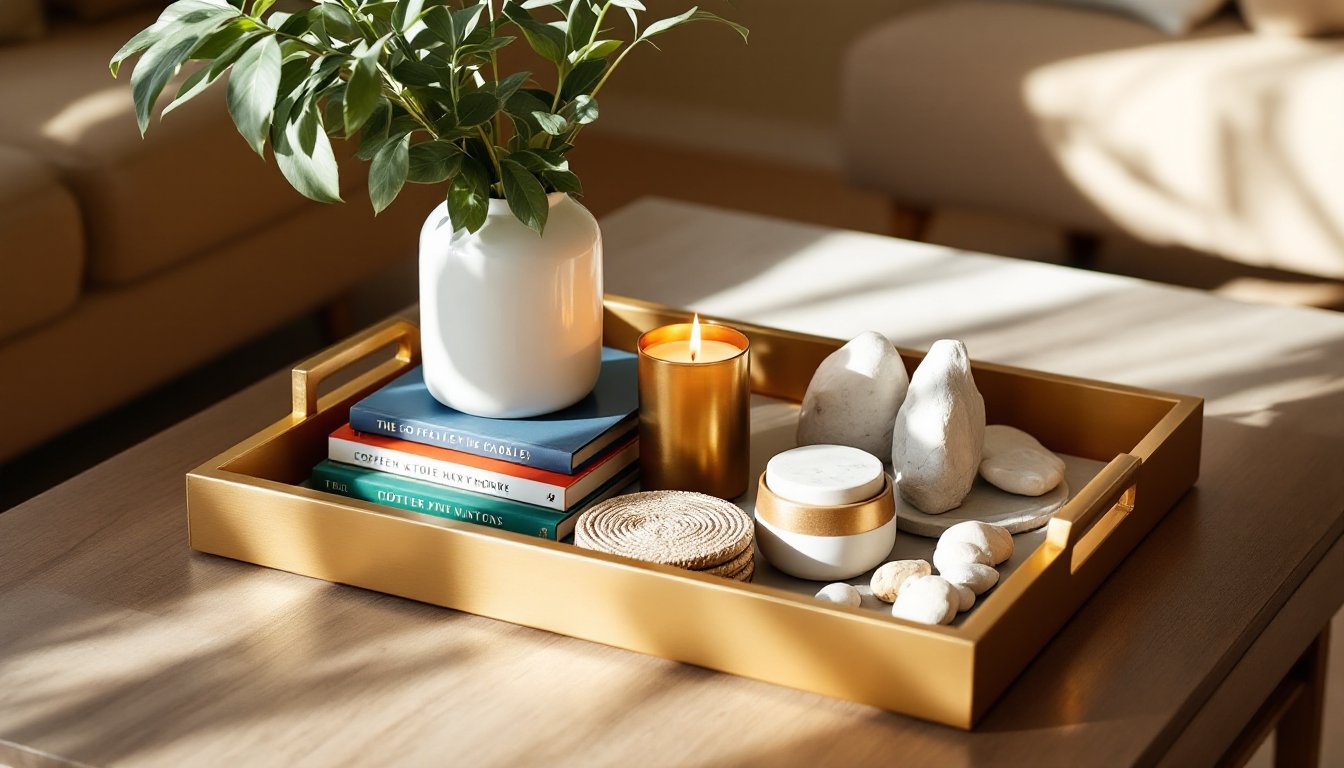
Start with a base: a small stack of books, a woven coaster set, or a decorative box anchors everything. This creates height variation immediately. Lean a coffee table book on the stack, its spine visible adds color and personality.
Add a vessel or two: a small vase (with or without fresh stems), a candle in a holder, or a sculptural piece draws the eye upward and breaks up flatness. These pieces don’t all need to match: a ceramic vase, a brass candle holder, and a stone figurine together feel curated, not cluttered.
Include functional items: a coaster set, small tray within the tray, or decorative bowl for remotes or small items. This isn’t just pretty, it’s honest. Your tray should work for daily life. A glass or ceramic dish corrals coins, keys, or glasses.
Finish with texture: a small plant, pebbles, a piece of driftwood, or woven elements add organic visual interest. According to interior design experts at ELLE Decor, styling with natural materials and varying heights creates depth that feels intentional.
The rule: odd numbers (3, 5, 7 items) feel more natural to the eye than even groupings. Aim for 5–7 items depending on your tray size.
Styling Techniques For Maximum Impact
Proportion is everything. If you place a large sculpture and nothing else, the tray feels empty. Pair it with smaller items, books, a candle, a small plant, so heights and sizes feel intentional and balanced.
Create a focal point. One item should draw the eye: a beautiful book cover, a striking candle, or a sculptural piece. Arrange other items in visual support around it, not competing for attention.
Use negative space. Your tray doesn’t need to be packed solid. A little breathing room between items keeps it from feeling cluttered or chaotic. Leave one quarter to one third of the tray surface visible.
Color matters quietly. Stick to a palette of 2–3 colors plus neutrals. If your room is soft whites and grays, add a pop of muted green with a small plant or a burnt orange candle. If your space is warm wood tones, echo that with books or a wooden piece. The tray should feel part of the room, not a separate display.
Rotate seasonally. In winter, warm metallics, deep candles, and cozy books feel right. In summer, lighter woods, fresh plants, and cooler tones refresh the look. Modern home decor inspiration shows how seasonal updates keep a tray fresh without major investment.
Don’t overthink it. The best-styled trays look effortless because they reflect actual life in the room. If you read design magazines, stack one on the tray. If you burn candles nightly, let one live there. Authenticity reads as style.
Maintaining Your Tray For Long-Term Appeal
Regular dusting keeps a tray looking sharp. Use a soft, dry cloth weekly on wooden or metal trays. For ceramic or marble, a barely damp microfiber cloth removes dust without water spots.
Protect the surface. Wood trays benefit from occasional conditioning with furniture oil or wax: this prevents drying and keeps the grain rich. Metal trays occasionally polished (brass especially tarnishes) stay bright. Marble and ceramic rarely need special care beyond gentle cleaning.
Rotate items regularly. Every 2–4 weeks, swap one or two pieces. Move the candle, replace the plant with fresh stems, or swap out a book. This keeps the tray feeling intentional and alive, not static or dusty.
Watch for damage. Water rings on wood, chips in ceramic, or tarnish on brass are all fixable, but catching them early matters. Wipe spills immediately. If a wooden tray gets a ring, light sanding and refinishing restore it.
Keep the underside clean. Flip the tray occasionally and wipe the bottom. Dust and debris underneath collect and transfer to your table surface. This small step prevents damage to the table itself and extends your tray’s lifespan.
Refresh when tired. Even the best-made tray looks old if it’s dinged, discolored, or just dated to your eye. Refinishing a wood tray or repainting a metal one costs far less than replacing it. Interior design guides often feature refresh ideas for existing pieces, extending their life and relevance.
Be honest about wear. If a tray has deep scratches, cracks, or heavy discoloration even though care, replacement is cleaner than repair. Quality trays last years: accept when one has earned its rest.
Bring It All Together
A coffee table decor tray transforms a plain surface into a designed, intentional space, without tools, permits, or major expense. Choose a tray that fits your table and your room’s style, layer items with varying heights and textures, and refresh it regularly. The result is a living room that feels purposeful, welcoming, and genuinely yours. Start simple, swap things seasonally, and let your tray evolve with your home.