
Table of Contents
ToggleButterfly wall decor has become a go-to choice for homeowners looking to add warmth and visual interest without undertaking a major renovation. Whether you’re decorating a nursery, updating a bedroom, or freshening up a living space, butterfly wall decor offers versatility, charm, and a connection to nature that appeals across design styles. From minimalist modern to cottage-core aesthetics, there’s a butterfly decor approach that fits your home. This guide walks you through the best styles, installation methods, and DIY projects to bring these delicate accents to your walls, practical tips from someone who’s hung them before.
Key Takeaways
- Butterfly wall decor offers versatile home design appeal across modern, boho, and traditional styles without requiring major renovations or structural mounting.
- Material choice—metal, wood, vinyl, or paper—determines durability and visual impact, with 3D options creating more sophistication than flat alternatives.
- Bedrooms, nurseries, hallways, and bathrooms are ideal spaces for butterfly wall decor, but avoid placement near heat sources and high-traffic zones prone to damage.
- DIY projects like painted murals, wooden cutouts, and paper art let you customize butterfly decor for $5–40 per piece while saving on ready-made options.
- Proper installation using wall anchors, odd-numbered arrangements, and varied sizing creates balanced, visually appealing butterfly wall displays that feel intentional rather than cluttered.
Why Butterfly Wall Decor Works for Modern Homes
Butterfly wall decor fills a unique role in home design: it’s decorative without being fussy, nature-inspired without feeling dated, and scalable to any budget. A single statement piece above a nightstand can shift the mood of an entire room, while a gallery arrangement creates focal-point drama. Unlike trendy pieces that date quickly, butterfly motifs have staying power. They work equally well in contemporary minimalist spaces, eclectic boho rooms, and traditional homes. The beauty lies in the execution, material choice, color palette, and arrangement style determine whether your butterfly decor feels sophisticated or cluttered. Because they’re generally lightweight and don’t require structural mounting, they’re ideal for renters and homeowners alike. You can experiment, move things around, and adjust your design without permanent wall damage.
Popular Butterfly Decor Styles and Materials
The material you choose dramatically affects the look and longevity of your butterfly wall decor. Each option brings distinct visual weight and durability.
3D Metal and Wooden Butterflies
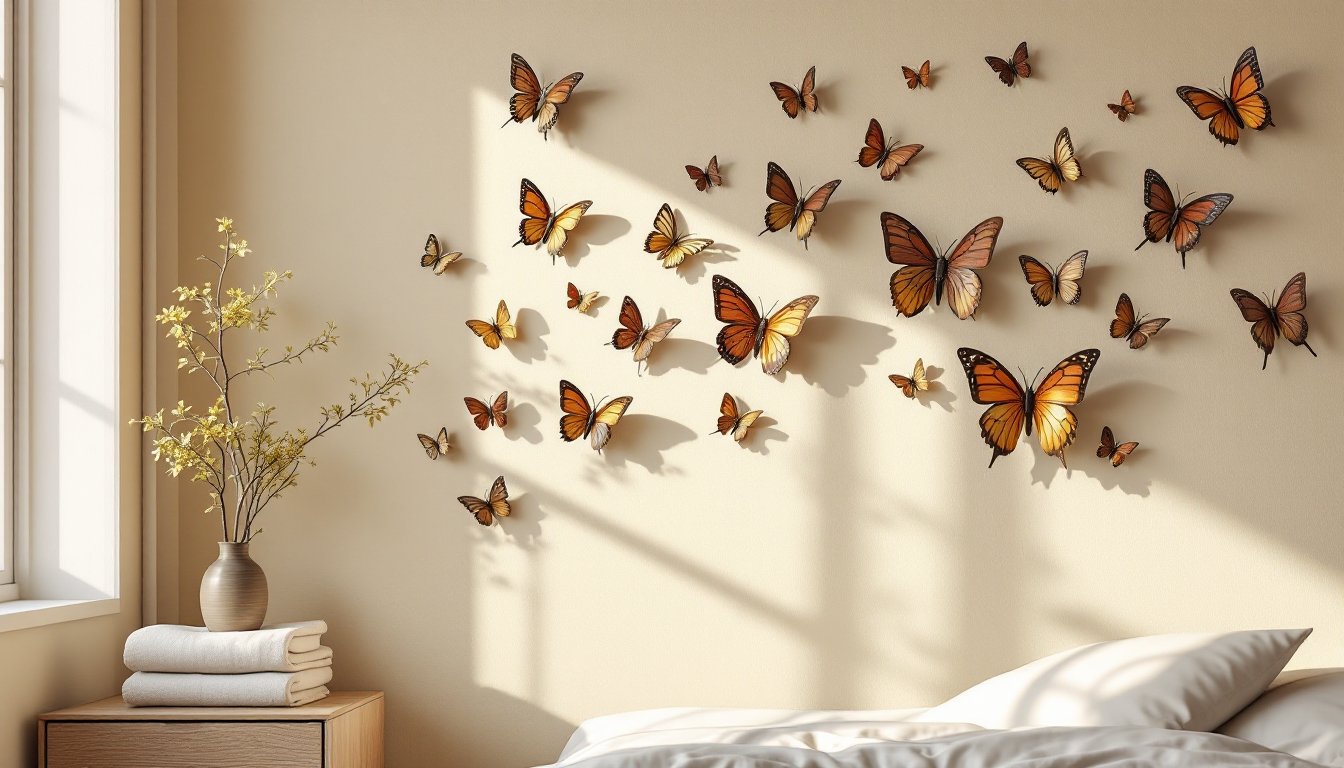
Metal butterflies, typically made from steel or aluminum, offer clean lines and a modern feel. They come painted in single colors or with patina finishes that mimic oxidized copper or aged bronze. Wooden butterflies, carved from pine, plywood, or MDF (medium-density fiberboard), add warmth and texture, especially in stained or natural finishes. Both materials hold up well over time and don’t fade like paper or vinyl. Metal pieces are heavier and typically require wall anchors or lightweight hooks rated for the weight (usually 1–3 pounds per piece). Wooden pieces are lighter but bulkier. These work best in gallery-style arrangements or as statement pieces because of their visual impact. They’re also the easiest to rearrange without wall damage, just reposition the hook. If you’re sourcing these locally, check craft stores, online marketplaces, or woodworking shops: prices range widely based on size and material grade.
Paper and Vinyl Wall Stickers
Vinyl wall stickers are removable, repositionable, and require zero tools. They stick directly to clean, smooth walls via adhesive backing and peel away without damage, ideal for renters or anyone hesitant about commitment. Paper butterflies (often embellished with glitter, metallic accents, or hand-painted details) are cheaper and lighter, but they’re fragile and won’t tolerate moisture or accidental bumps. Vinyl is more durable and works in bathrooms or kitchen areas where humidity is higher, though avoid direct contact with steam or water spray. The downside to both: they can look flat and two-dimensional compared to 3D options, though higher-end vinyl stickers now include shading that creates depth illusion. These are best for creating repeating patterns, ombre cascades, or filling large wall areas without overwhelming detail.
Best Rooms and Wall Placements for Butterfly Decor
Placement amplifies the impact of your butterfly wall decor. Bedrooms remain the most popular spot, above the headboard, flanking a mirror, or scattered across an accent wall. The peaceful, nature-inspired aesthetic pairs naturally with rest spaces. Nurseries and kids’ rooms benefit from butterfly decor because the designs don’t feel babyish: they grow with the child. Bathrooms work well with vinyl or sealed metal butterflies since they resist moisture: paper options will wrinkle and warp. Living rooms and dining spaces can handle a more formal or abstract arrangement. Hallways are often underutilized spaces where a series of butterflies creates movement and visual interest as people walk through. Avoid placing them directly above heat sources (vents, radiators) or in high-traffic zones where they’ll get bumped, unless you’ve secured them with adequate hardware. North-facing walls with softer, indirect light showcase colors beautifully without fading. If you’re using vinyl stickers, apply them to smooth, clean drywall or primed surfaces. Textured walls, wallpaper, or semi-gloss paint surfaces can cause adhesion issues, so test a small piece first. This is also where working with an interior design inspiration site like Decoist can spark placement ideas tailored to your room’s proportions and lighting.
DIY Butterfly Wall Decor Projects
Creating your own butterfly wall decor saves money and lets you customize colors and styles. Here are three achievable projects.
Painted Butterfly Mural: Choose an accent wall and lightly sketch butterfly outlines in pencil. Use painter’s tape to mask edges if you want crisp lines. Paint with acrylic wall paint or latex, one or two coats usually suffices. For a softer, watercolor effect, dampen your brush and let colors blend. This requires only basic painting skills and dries quickly. Total cost: $10–20 in paint.
Wooden Butterfly Cutouts: Use a jigsaw or scroll saw to cut butterfly shapes from ½-inch pine boards or plywood. Sand smooth with 120-grit sandpaper, then stain or paint as desired. Seal with polyurethane if hanging in a damp area. Attach sawtooth hangers (two per butterfly for stability) to the back. This requires power tools and woodworking basics, Instructables has detailed patterns and step-by-step tutorials if you’re new to cutting curves. Cost: $15–40 per butterfly, depending on size.
Paper Butterfly Wall Art: Cut butterfly shapes from cardstock, scrapbook paper, or wallpaper remnants using butterfly templates (free online). Layer two or three shapes in varying sizes for depth. Mount with small nails, tacks, or adhesive dots (removable, so no wall damage). Mix colors and patterns for visual richness. Total cost: $5–15 per arrangement. For inspiration and detailed craft tutorials, The Spruce Crafts offers excellent step-by-step guides.
How to Install and Arrange Butterfly Wall Decor
Proper installation ensures your butterflies stay put and look balanced.
For Metal and Wooden Pieces:
- Determine placement by laying pieces on the floor first to visualize the arrangement, this saves wall holes and regret.
- Use a stud finder if mounting near studs (ideal for heavier pieces). Mark pilot holes with a pencil.
- Install appropriate wall anchors, toggle bolts for drywall, heavy-duty anchors for 2–3 pound pieces. Avoid nailing directly into plaster or textured walls: use anchors rated for your wall type.
- Hang at eye level (57–60 inches from floor to center) for visual comfort, or 12–18 inches above furniture for balance.
- Use a level to ensure pieces don’t tilt, especially in gallery arrangements.
For Vinyl Stickers:
- Clean the wall thoroughly with rubbing alcohol and let dry completely, dust and oils prevent adhesion.
- Start at the center of your design and work outward, smoothing with a squeegee or plastic card as you go to avoid air bubbles.
- Overlapping layers create depth: darker stickers on top of lighter ones work well.
- Once set, they can be carefully peeled and repositioned if placement isn’t perfect.
Arrangement Principles:
- Odd numbers (3, 5, 7) feel more natural than even counts.
- Vary sizes to create visual rhythm, don’t line everything up in neat rows unless you’re going for minimalist geometry.
- Cluster tightly for impact or spread across the wall for a scattered, whimsical feel.
- Mix heights if hanging multiple pieces: a slight stagger looks intentional.
Step back frequently to assess balance. Fresh eyes catch asymmetry you’ve adjusted past. If renting or nervous about commitment, start with removable options and upgrade to permanent mounting once you’ve lived with the arrangement a few weeks.