
Table of Contents
ToggleWalk into any vintage home restoration project and you’ll quickly understand why 1950s refrigerators remain one of the most coveted appliances for mid-century enthusiasts. These weren’t just iceboxes with better insulation, they were design statements that embodied postwar optimism, technological progress, and the promise of modern living. A 1950 refrigerator or 1950’s refrigerator didn’t just keep food cold: it announced to visitors that a household had arrived in the future. Whether you’re restoring one for authentic period authenticity or integrating vintage style into a contemporary kitchen, understanding what made these machines special helps you appreciate their design legacy and maintain them properly.
Key Takeaways
- 1950s refrigerators were design statements that combined postwar optimism with technological innovation, featuring iconic rounded corners, chrome trim, and pastel colors like turquoise and avocado green.
- Before purchasing a vintage 1950s refrigerator, inspect the compressor for smooth operation, assess the exterior finish condition, and have electrical systems evaluated by a licensed technician to ensure safety.
- A working restoration of a 1950s refrigerator typically costs $400–$2,000+ and consumes 3–4 times more electricity than modern appliances, making them ideal as secondary cooling or decorative pieces.
- Integrating a vintage 1950s refrigerator into modern kitchens requires careful planning around space constraints, electrical codes, and color coordination with contemporary design styles.
- Popular 1950s refrigerator features included dedicated compartments for meat and butter, improved insulation and drainage systems, and smooth door mechanisms that represented genuine advances over previous models.
The Evolution Of Refrigerator Design In The 1950s
The 1950 refrigerator marked a turning point in American kitchen design. Before this era, iceboxes still lingered in many homes, but the postwar economic boom transformed refrigeration from luxury to necessity almost overnight. Manufacturers like General Electric, Frigidaire, and Westinghouse competed fiercely to capture market share, and they knew design mattered as much as function.
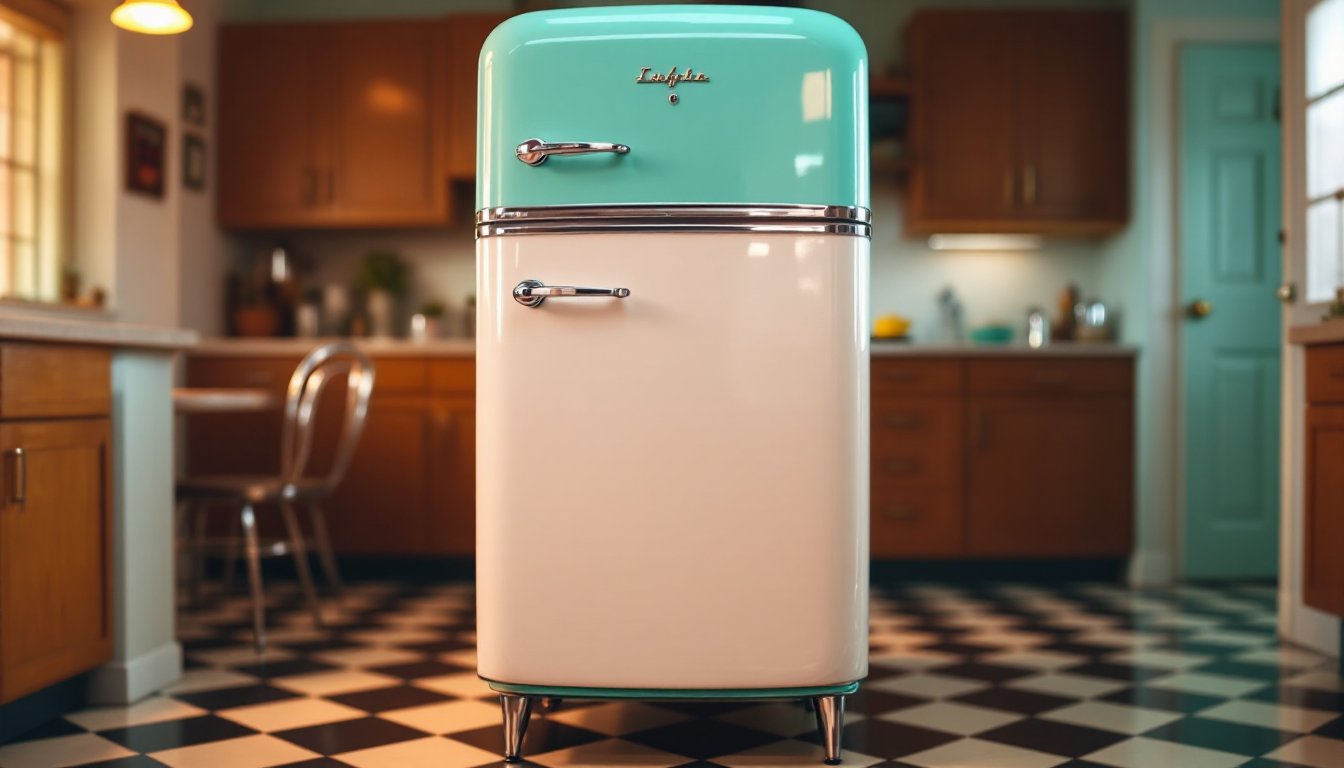
Early 1950s models featured the iconic rounded corners and boxy silhouettes that define the era. Cabinets moved from simple white porcelain to chrome-trimmed finishes with two-tone color schemes. The inside grew compartments: dedicated meat drawers, butter keepers, and eventually, the revolutionary freezer section that didn’t require defrosting every few weeks (at least, less frequently than the manual-defrost units many households endured).
By mid-decade, design had evolved further. Manufacturers introduced larger capacity, more shelving, and better insulation that actually worked. A 1950’s refrigerator from 1958 looked and performed noticeably different from one made in 1950. The styling became sleeker, handles grew more angular, and color options expanded beyond white and cream to pastels, pink, turquoise, yellow, and soft green became symbols of the modern kitchen.
Key Features That Made 1950s Refrigerators Stand Out
What separated a 1950 refrigerator from models before or after had a lot to do with specific engineering details that seem quaint now but were genuinely novel then. Most units still required manual defrosting, which meant draining a pan of meltwater from underneath the unit every week or two, a chore that eventually drove demand for frost-free models. The freezer compartment occupied space above the fresh food section, and shelves weren’t adjustable on many models, forcing homeowners to live with the layout they got.
Ice cream stayed solid, butter stayed spreadable, and vegetables lasted longer because these refrigerators maintained consistent cold temperatures better than anything consumers had experienced before. Drainage systems, once a reliability nightmare, became functional enough that you didn’t need a plumber every few months. Hinges and seals improved significantly, and the door-opening mechanism became smooth rather than stiff.
Another key feature was the exterior design that doubled as kitchen décor. Unlike earlier models that looked purely utilitarian, 1950s units came with brushed chrome trim, enameled color panels, and decorative handles. Some featured chrome legs that elevated the cabinet off the floor, both a design choice and a practical one, allowing you to sweep underneath.
Iconic Styles And Colors Of The Era
Pastels dominated the late 1950s kitchen, and refrigerators led the charge. Avocado green, harvest gold, and turquoise weren’t afterthoughts, they were the main color story. Two-tone combinations were equally popular: white with red or yellow trim, or pale blue with chrome accents. Some models featured horizontal stripes or boomerang patterns on the door panels, directly referencing the atomic-age design language that permeated American consumer goods.
The exterior finish options included porcelain enamel (durable but prone to chipping), brushed stainless steel (expensive, so rare), and painted metal with a clear protective coating. Chrome accents, whether trim, legs, or handles, became the visual signature of the era. Models from Westinghouse, GE, and Philco each developed distinct styling languages. A Philco stood out visually from a Frigidaire, and collectors today still recognize brand identity instantly.
Collecting And Restoring Vintage 1950s Refrigerators
If you’re considering sourcing and restoring a vintage 1950s refrigerator, approach it like any restoration project: honestly assess condition, plan the scope, and be prepared for mechanical surprises. A unit that sits unused for decades will almost certainly need work before it runs safely.
Start by examining the compressor (the mechanical unit that pumps refrigerant). If the motor runs smoothly with a gentle hum and you feel cold air coming from the vents, that’s a positive sign. If it runs but barely cools or makes grinding noises, the compressor may need rebuilding or replacement. Refrigerant systems are sealed, so recharging an old unit isn’t a weekend DIY task, most states regulate refrigerant handling, and you’ll need a licensed technician with proper certifications.
The exterior restoration involves different challenges depending on the original finish. Chrome and stainless steel can be polished or restored by specialty shops (search for “vintage appliance restoration” in your area). Porcelain enamel with chips is trickier, professional repainting is expensive, and mismatched touch-ups show. Some collectors embrace the patina and age: others invest in panel replacement or restoration services.
Electrical safety requires careful attention. Older refrigerators used 2-prong cords without ground connections, and many ran on slightly different electrical specifications than modern US standards. Never plug an old refrigerator into a modern outlet without having it inspected by an appliance electrician. Wiring insulation deteriorates, and the risk of shock or fire isn’t worth saving a few hundred dollars. According to appliance reviews and testing, vintage units require particular electrical scrutiny before regular operation.
Budget realistically. A cosmetically sound unit that cools and runs may cost $400–$1,200 depending on brand, condition, and rarity. Professional restoration, including repainting, mechanical work, and electrical updates, can easily exceed $2,000. If you’re planning to use the refrigerator as your primary food storage, factor in the energy cost: a 1950s unit uses roughly 3–4 times more electricity than a modern Energy Star model. Most restorers treat vintage refrigerators as secondary cooling (for a bar, garage, or workshop) or primarily as decorative statement pieces.
Integrating Mid-Century Refrigerators Into Modern Kitchens
Blending a vintage 1950s refrigerator into a contemporary kitchen requires thoughtful design choices and honest assessment of your kitchen’s layout. Space is the first constraint. A 1950 refrigerator or 1950’s model typically ranges from 14 to 18 inches deep and 28 to 36 inches wide, smaller than most modern refrigerators, which can be a problem if your kitchen counter depth assumes modern appliance sizing.
If you’re working with a galley kitchen or an older home, this depth often aligns naturally. In newer homes with 24-inch-deep counters, a vintage unit sits 4–6 inches proud of the counter line, creating an awkward visual. Some people embrace this as intentional retro styling: others find workarounds like building out the counter depth or placing the unit in a corner.
Electrically, run a dedicated circuit for the appliance if you’re keeping it as a working refrigerator. Modern kitchens code-require this: vintage kitchens didn’t have many circuits at all. Kitchen design ideas often feature vintage appliances in vintage kitchens or curated retro spaces, not forced into contemporary minimalist designs.
Color coordination matters too. A turquoise 1950s refrigerator looks stunning in a kitchen with coordinating mid-century cabinetry, tile, or hardware, but it clashes with a 2020s farmhouse aesthetic or contemporary white-and-black modern design. Pastel colors from the 1950s sit uneasily next to warm whites and stainless steel appliances that dominate current trends. That said, bold design moves can work: a single vintage refrigerator as a focal point in an otherwise retro-leaning kitchen renovation makes a confident statement.
Consider also whether you want the unit functional or decorative. A working vintage refrigerator adds authenticity but requires ongoing maintenance and higher energy costs. As supplemental cooling or display piece (with fake food inside), it’s a showstopper with minimal responsibility. Whatever choice you make, treat the decision deliberately rather than trying to force a square peg into a round hole.
Conclusion
A 1950s refrigerator represents more than just cold storage, it’s an artifact of postwar American optimism and industrial design at its most playful. Whether you’re restoring one to working condition, displaying it as a design statement, or researching mid-century kitchen aesthetics, understanding the history, mechanics, and design language of these appliances deepens your appreciation. Home renovation tutorials and restoration techniques can guide you through the process if you decide to pursue a full restoration. Approach the project realistically: these machines are beautiful, functional, and charming, but they’re also 70+ years old and require respectful attention to electrical and mechanical safety before regular use.